


Actualités locales. Voix locales. Vermont.

ParPERSONNEL
NORTHERN FRANKLIN COUNTY AT A CROSSROADS
Four Vermont towns confront economic uncertainty, demographic change, and a question as old as the Republic: Who will determine their future?
Partagez votre amour
There is a peculiar irony in the American countryside. The communities that have contributed so much to the nation’s character are increasingly being asked to justify their own survival.
Consider northern Franklin County, Vermont.
Here, along the Route 105 corridor, the towns of Montgomery, Enosburgh, Richford, and Berkshire represent something increasingly uncommon in American life: communities where independence is not merely a political slogan but a practical necessity.
These are places built by farmers, millworkers, merchants, tradesmen, and generations of families who understood that prosperity was neither guaranteed nor bestowed by distant authorities. It was earned, often painfully, through enterprise, thrift, and perseverance.
Today, that inheritance faces a formidable test.
The pressures are familiar: rising property taxes, escalating housing costs, an aging population, uncertain employment prospects, and the steady migration of economic opportunity toward larger population centers.
But the underlying question is more consequential. Can small-town Vermont preserve its independence while adapting to an economy increasingly organized around institutions, regulations, and decisions made elsewhere?
The Economics of Staying Put
For much of Vermont’s history, the family farm, the village merchant, and the local manufacturer formed the backbone of rural economic life. Their fortunes were intertwined. Money earned locally tended to circulate locally.
That economic arrangement has changed dramatically.
Agricultural consolidation, online commerce, changing consumer habits, and the disappearance of traditional employers have weakened the commercial foundations of many rural communities.
Meanwhile, the cost of maintaining municipal services, schools, roads, and public infrastructure continues to challenge communities with limited tax bases.
The consequences are particularly troubling for younger residents.
What good is the promise of rural opportunity if a young family cannot afford a home, find dependable employment, or envision a future in the town where its parents and grandparents lived?
A community that cannot retain its young eventually becomes something other than a community. It becomes a memory.
Four Towns, One Economic Destiny
Montgomery possesses extraordinary natural beauty and proximity to Jay Peak, advantages that create opportunities in tourism, recreation, and hospitality.
Enosburgh remains an important commercial and agricultural center, with businesses and institutions serving communities beyond its borders.
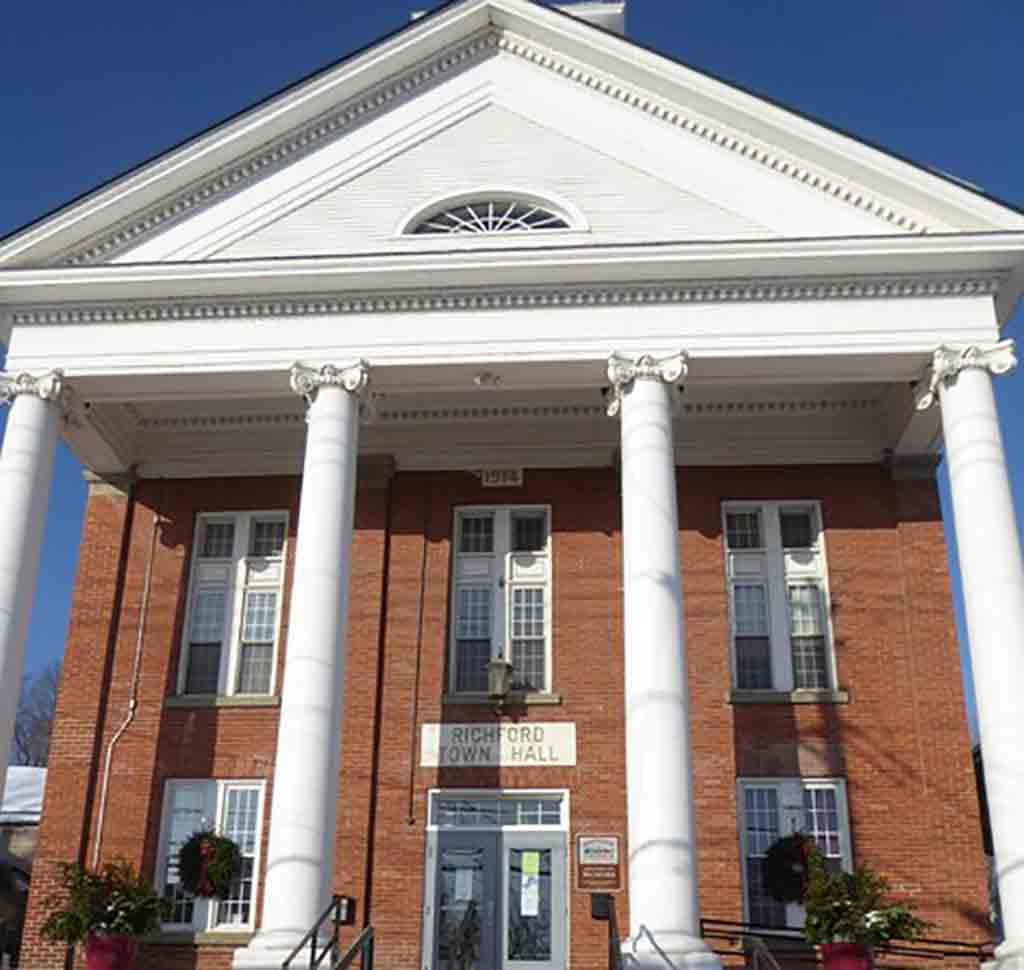
Richford, situated along the Canadian boundary, retains the geographic advantages of a border town, even as changing patterns of cross-border commerce complicate its prospects.
Berkshire, with its agricultural landscape and rural character, faces the challenge of preserving its identity while sustaining the economic activity necessary to support future generations.
Their circumstances differ. Their interests, however, are inseparable.
A thriving business in Enosburgh benefits customers in Montgomery. Employment in Richford supports households throughout the region. Tourism dollars spent near Jay Peak can circulate through neighboring communities.
Economic geography does not recognize municipal boundaries quite as faithfully as municipal governments do.
The Case for Local Initiative
There is no shortage of government programs promising rural revitalization. Some provide valuable assistance. Others produce impressive reports, elaborate administrative structures, and remarkably little measurable progress.
The distinction matters.
Northern Franklin County does not need another ceremonial declaration of economic distress. It needs investment, entrepreneurs, attainable housing, competitive businesses, and public officials willing to measure success by results rather than intentions.
It also needs residents prepared to patronize local establishments, participate in civic affairs, and insist upon accountability from those entrusted with public resources.
None of this requires abandoning Vermont’s traditions. Quite the contrary.
Self-reliance, neighborliness, fiscal discipline, and local responsibility are not antiquated virtues. They are precisely the qualities that can sustain these communities through an uncertain century.
The crossroads before northern Franklin County is therefore not simply economic. It is philosophical.
Will these towns become increasingly dependent upon decisions made beyond their borders, or will they reclaim the initiative that built them?
The answer will not arrive from Montpelier or Washington alone.
It will emerge from town meetings, storefronts, farms, kitchen tables, and the determination of people who still believe that a small Vermont town is worth preserving.
The future of northern Franklin County has not yet been written. The question is whether its residents intend to remain the authors.